
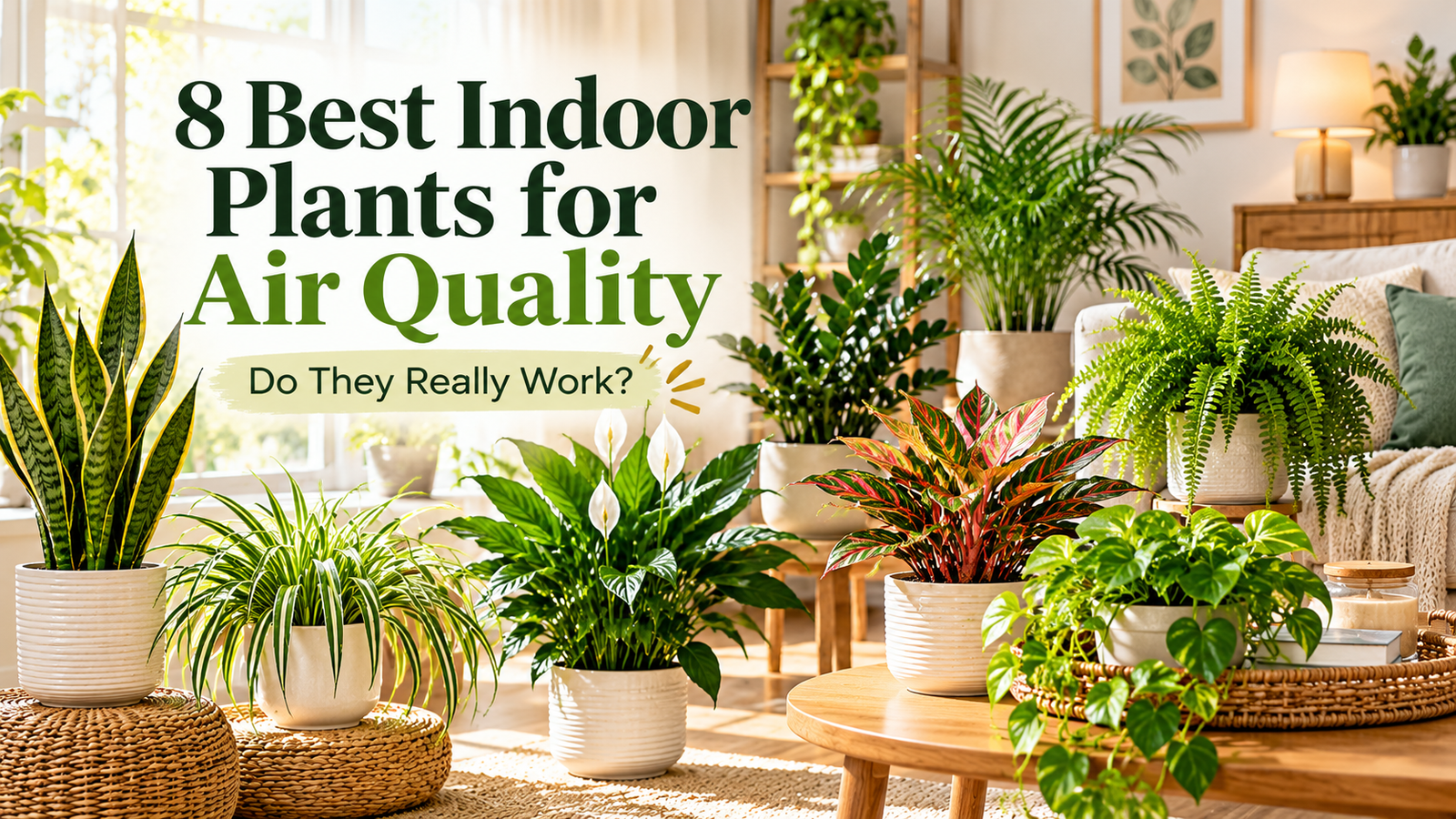
You bring home a little spider plant, set it on a sunny shelf, and suddenly the room feels brighter. A week later, you’re checking for new leaves as if it’s a tiny family member.
That’s part of the charm of houseplants. But if you bought yours because a label promised “cleaner air,” you deserve to know what that really means.
The best indoor plants for air quality are popular for their looks and easy care. While researchers have studied how plants absorb certain chemicals, a few pots won’t replace ventilation or an effective air purifier.
Here’s how to choose nine favorites for a home that feels greener—and make purchases you won’t regret.
Quick Answer: Which Indoor Plants Should You Choose?
Snake plants, spider plants, pothos, peace lilies, ZZ plants, Boston ferns, parlor palms, and Chinese evergreens are nine popular options.
Choose according to daylight, watering habits, available space, and pet safety—not promises of dramatic air purification.
What Science Actually Says About Indoor Plants and Air Quality
NASA’s well-known research explored plants and chemical removal in controlled chambers. But everyday homes are much larger, have changing airflow, and contain ongoing pollution sources.
A later research review found that ordinary quantities of potted plants remove volatile organic compounds (VOCs) too slowly to compete with typical building ventilation.
That doesn’t take away their value as decor.
It simply means cleaner air calls for other steps: reduce indoor smoke, vent cooking emissions, control moisture, and use suitable filtration if airborne particles are a concern.
The EPA’s indoor air quality guidance explains these approaches.
The 8 Best Indoor Plants for Air Quality: Care and Amazon Picks
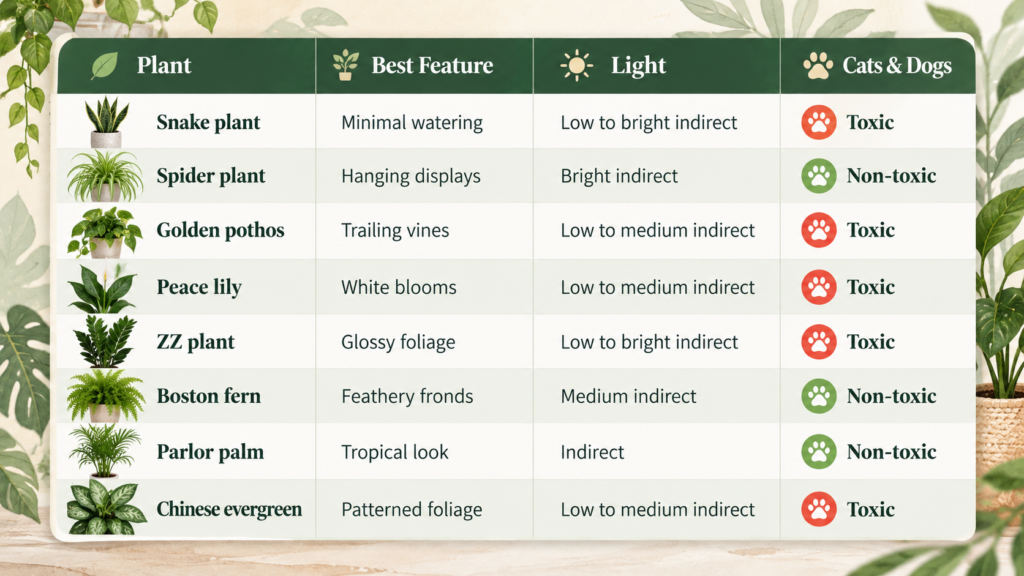
“Low light” means tolerant of limited daylight, not a windowless room. Pet classifications refer to cats and dogs; check the exact species before buying.
1. Snake Plant — For Busy Schedules
Dracaena trifasciata
Its tall, upright leaves add structure to a bedroom or entryway, and it tolerates occasional missed watering.
Let the soil dry well and use a pot with drainage. Growth may slow in a dim corner. Keep this plant away from pets that chew leaves.
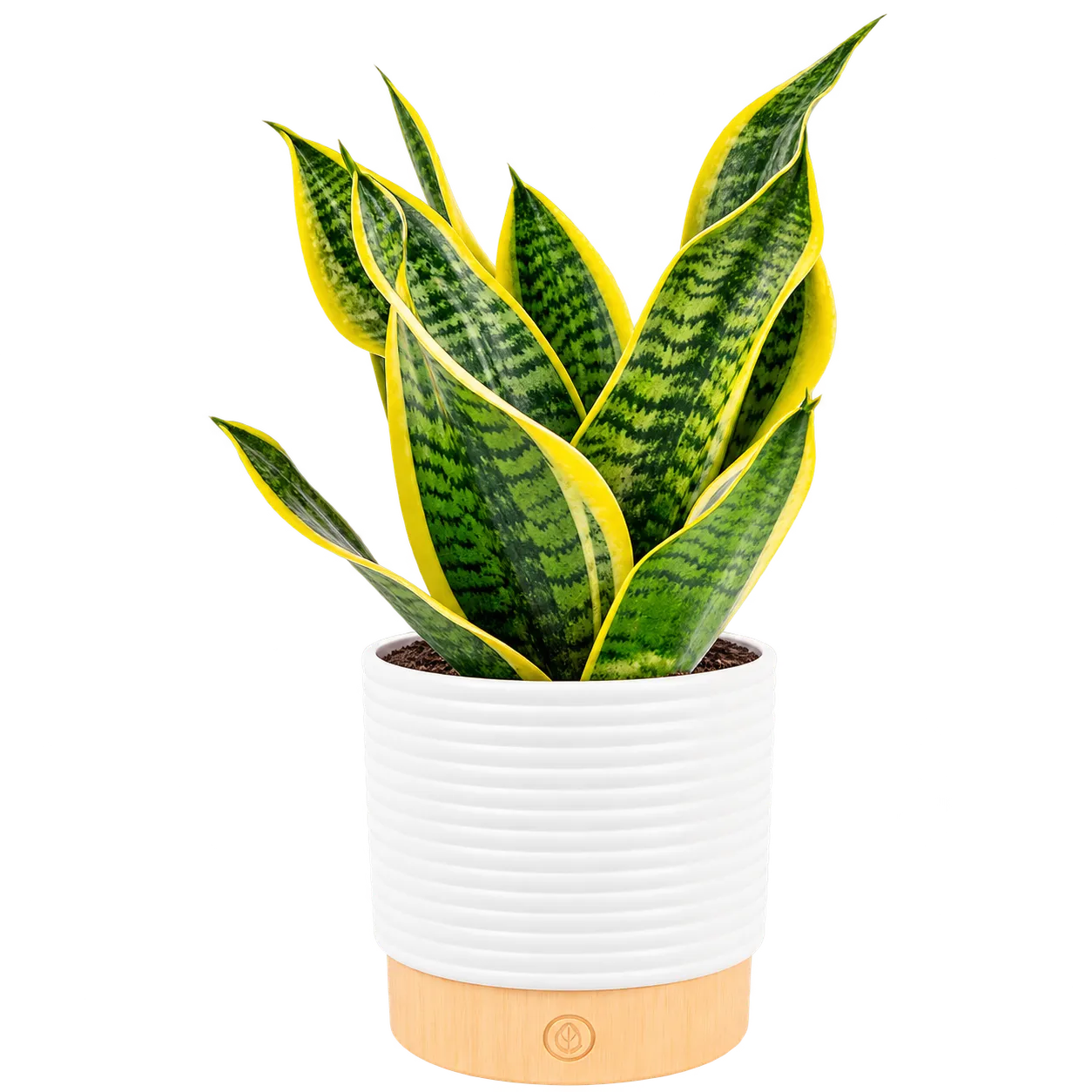
Costa Farms Snake Plant
Live indoor plant • 6-inch pot
Beginner-friendly and low-maintenance.
2. Spider Plant — For Pet-Friendly Shelves
Chlorophytum comosum
With arching striped leaves and dangling baby plants, this one looks especially good in a hanging pot.
It enjoys bright, indirect light and watering after the surface begins to dry.
The ASPCA lists it as non-toxic to cats and dogs, although chewing plants can still upset a pet’s stomach.
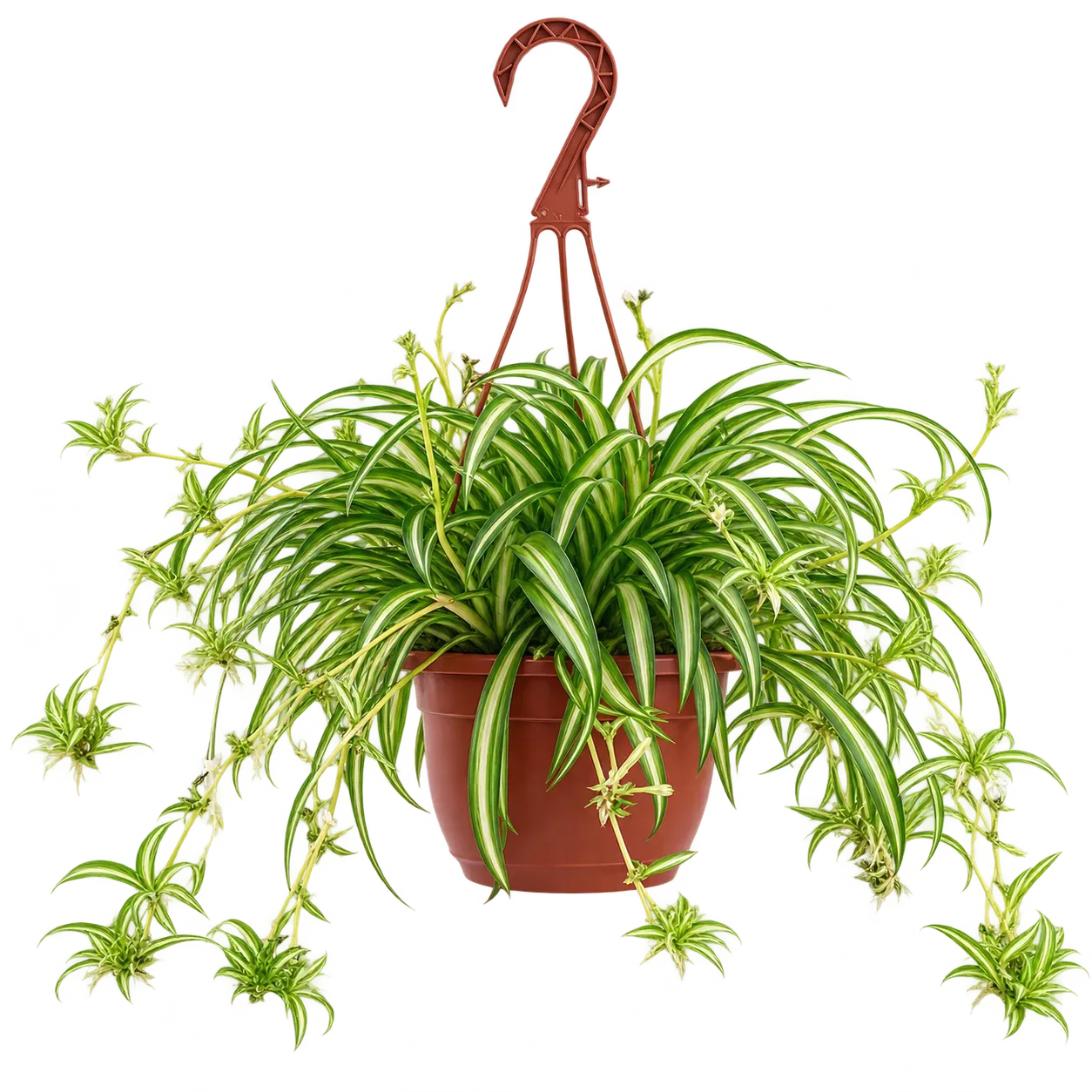
American Plant Exchange Spider Plant
Live Indoor Plant • 8-inch Hanging Basket
Beautiful cascading leaves, easy care,
and non-toxic to cats and dogs.
3. Golden Pothos — For Bookshelves
Epipremnum aureum
Want greenery without giving up floor space? Let pothos vines trail from a shelf or grow around a support.
Its heart-shaped, often variegated leaves brighten plain furniture.
Moderate indirect light helps preserve color; water when the top soil dries. Pothos is toxic to pets.
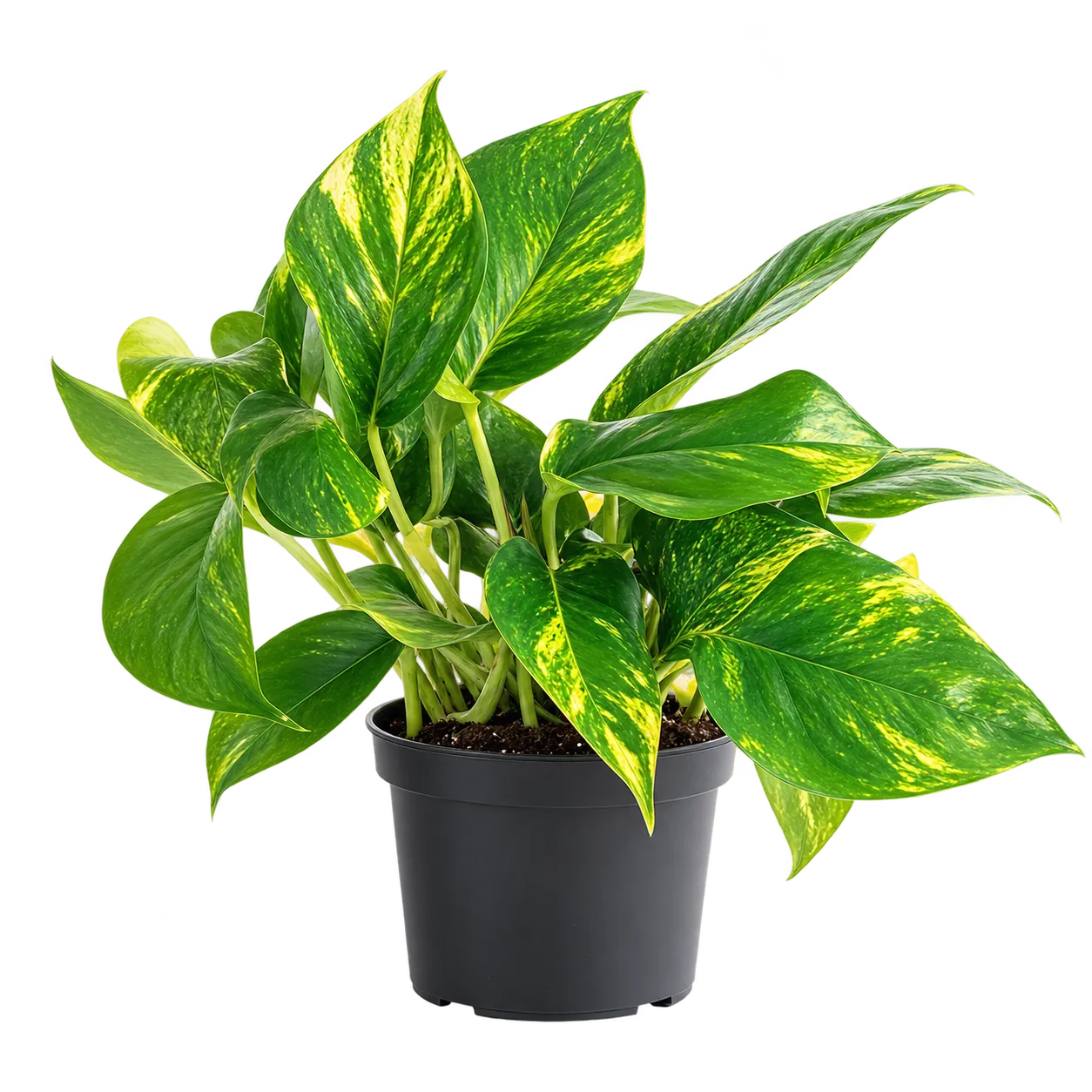
Costa Farms Golden Pothos
Live Indoor Plant • Medium Size
Beautiful golden-green leaves, easy care,
and perfect for shelves or home decor.
4. Peace Lily — For Elegant Corners
Spathiphyllum spp.
Dark, glossy leaves and white spathes make peace lilies a beautiful alternative to cut flowers.
They’re happiest with indirect light and fairly consistent moisture, but soggy roots are trouble.
Keep them out of reach of cats and dogs: their calcium oxalate crystals can cause painful mouth irritation.
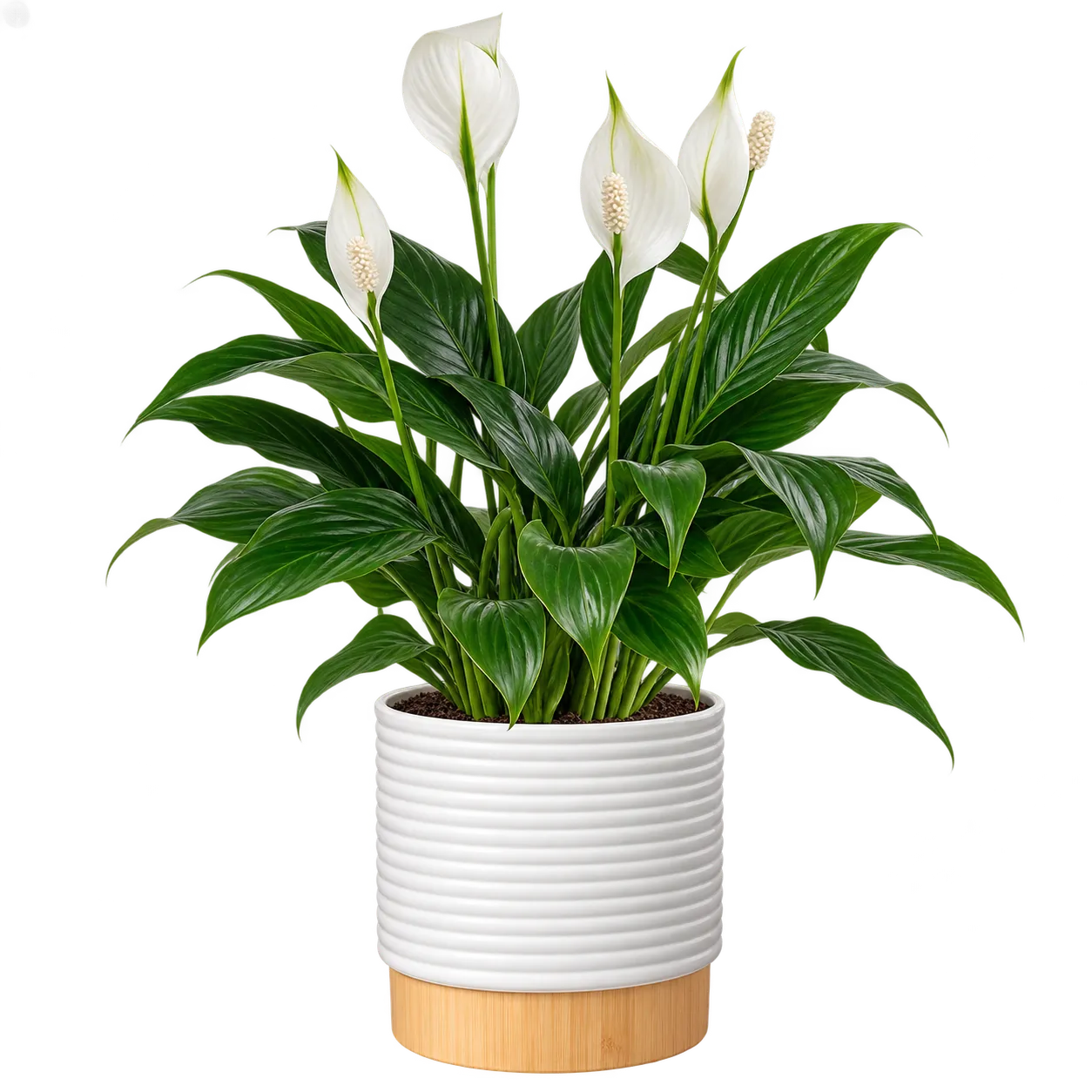
Costa Farms Peace Lily
Live Indoor Plant • Medium (14–24 Inches Tall)
Elegant white blooms, glossy green foliage,
and a charming decorative planter.
5. ZZ Plant — For Low-Maintenance Offices
Zamioculcas zamiifolia
A ZZ plant’s shiny leaves look polished even without much fuss.
Its underground rhizomes store water, so frequent watering can do more harm than good.
Give it some indirect daylight, let its soil dry between drinks, and keep it away from pets and young children likely to nibble.
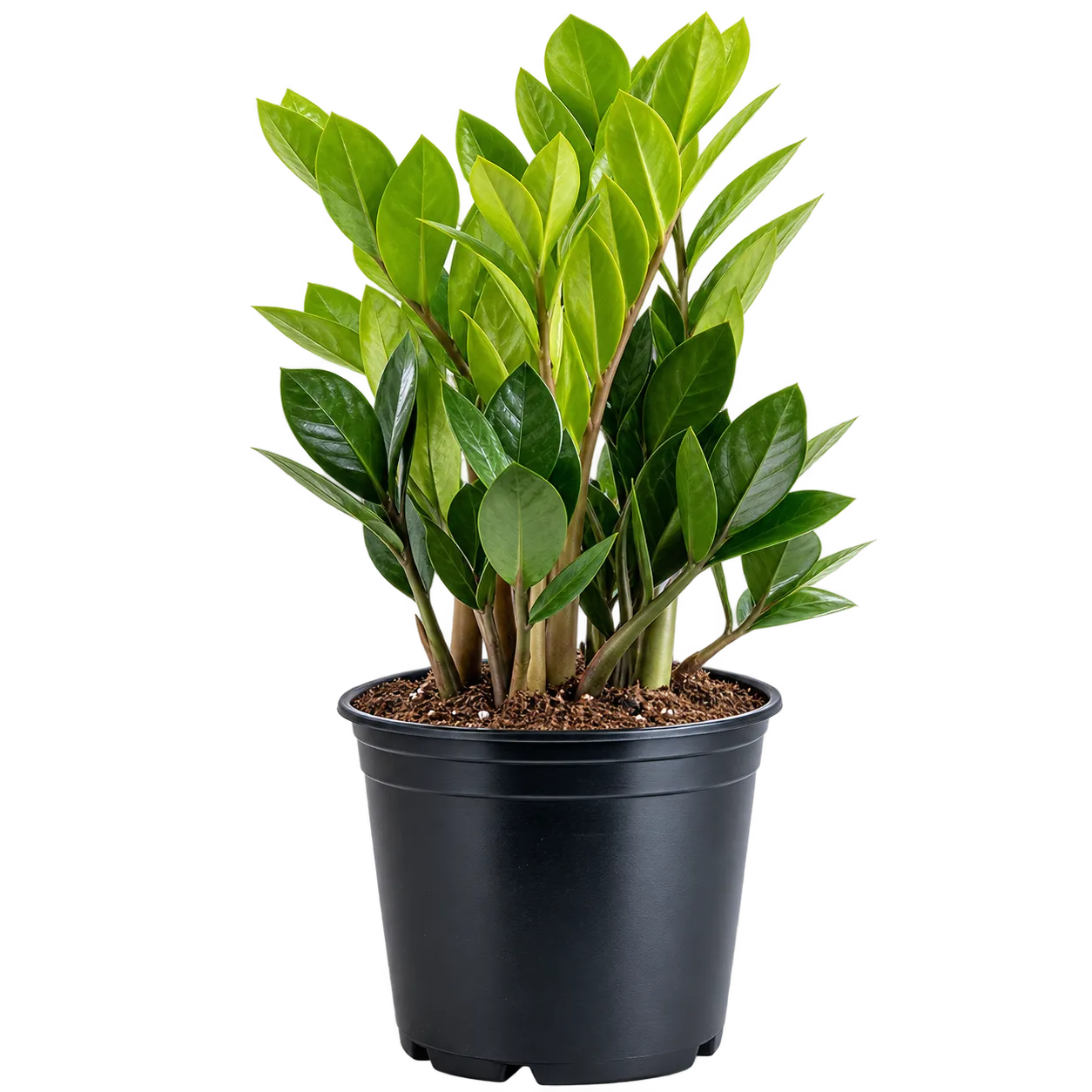
Costa Farms ZZ Plant
Live Indoor Plant • Medium (12–20 Inches Tall)
Glossy green foliage, drought-tolerant,
and ideal for low-maintenance home or office decor.
6. Boston Fern — For Lush Green Texture
Nephrolepis exaltata
This fern brings soft, cascading greenery to a bathroom with a window or a bright living room.
Unlike a snake plant, it dislikes drying out completely.
Keep the soil appropriately moist, but never waterlogged, and avoid direct blasts from heating vents.
Boston ferns are non-toxic to cats and dogs.
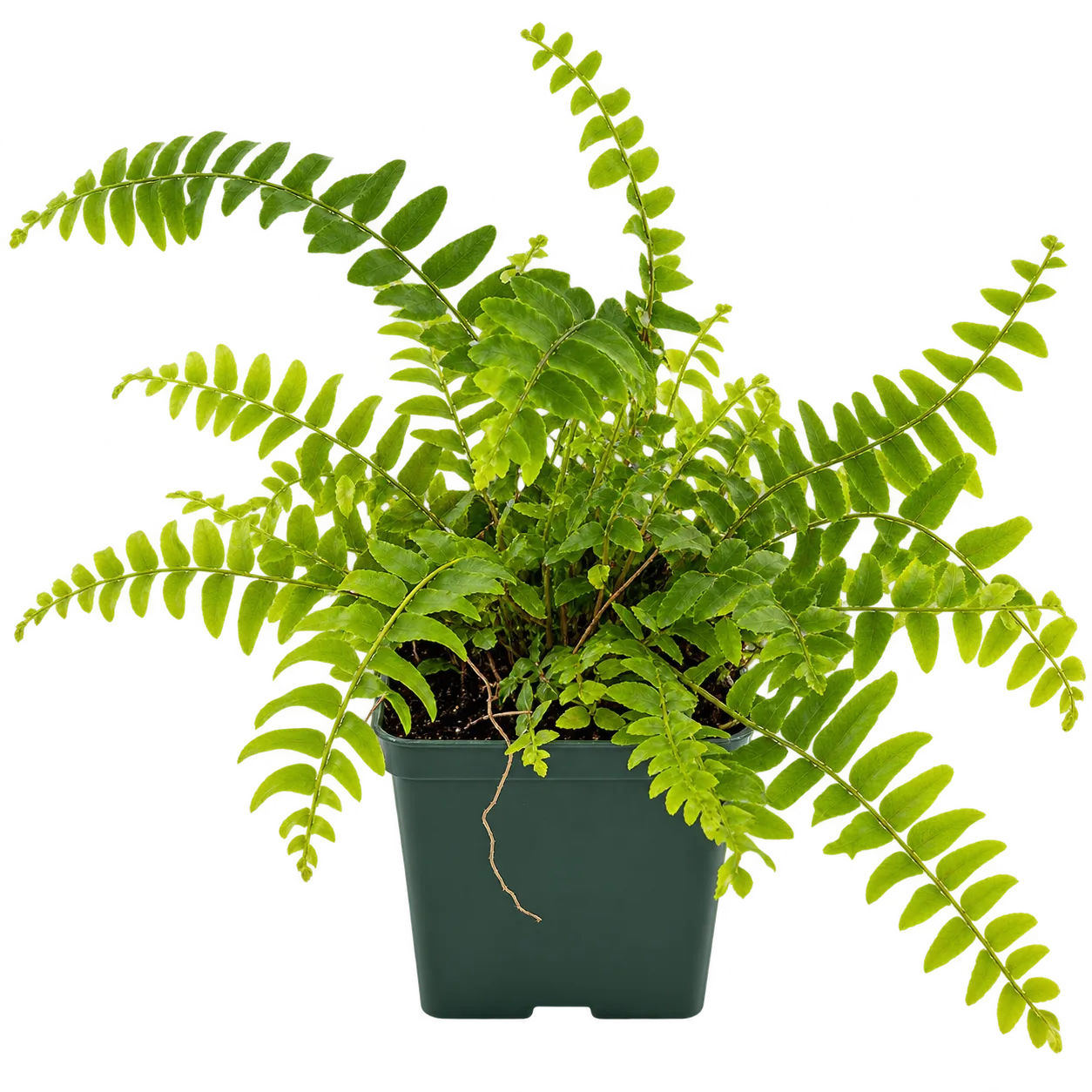
True Boston Fern
Nephrolepis exaltata • Live Fern Plant
Beautiful cascading green fronds,
ideal for hanging baskets and bright,
humid indoor spaces.
7. Parlor Palm — For Small-Space Tropical Style
Chamaedorea elegans
The delicate fronds of a parlor palm bring a relaxed tropical look without overwhelming a small room.
Set it in indirect light, avoid harsh midday sun, and water with care rather than by a rigid calendar.
It’s another ASPCA-listed non-toxic choice for households with cats or dogs.
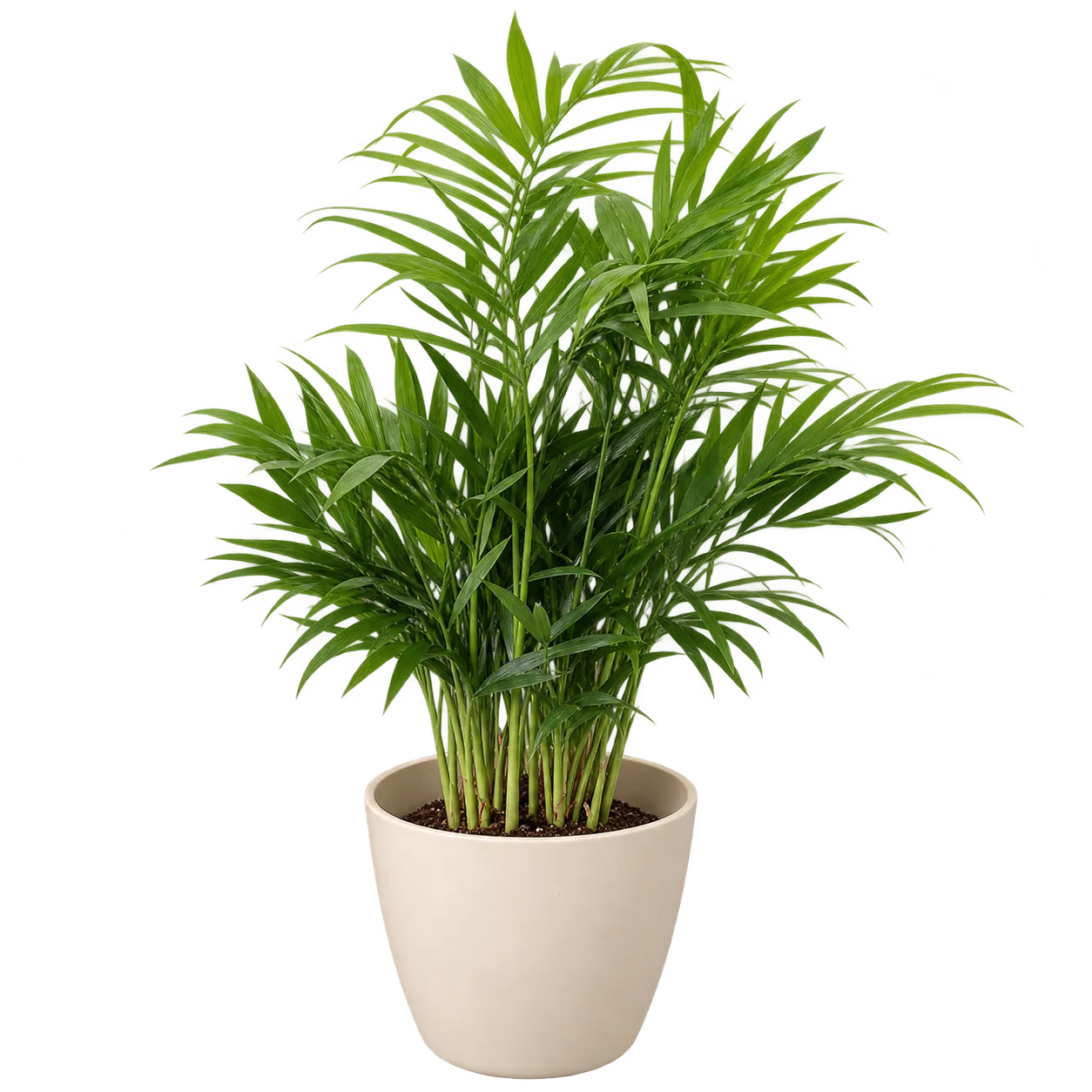
Thorsen’s Greenhouse Parlor Palm
Live Neanthe Bella Palm • 4-Inch Pot
Elegant tropical foliage, easy to maintain,
and non-toxic to cats and dogs.
Perfect for cozy indoor spaces.
8. Chinese Evergreen — For Colorful Foliage
Aglaonema spp.
Chinese evergreens come with silver, green, cream, or pink-patterned leaves, depending on the variety.
Many tolerate lower light, although colorful cultivars may need more brightness.
Use well-draining soil and avoid standing water. They’re toxic to cats and dogs, so choose another plant for a pet-accessible shelf.
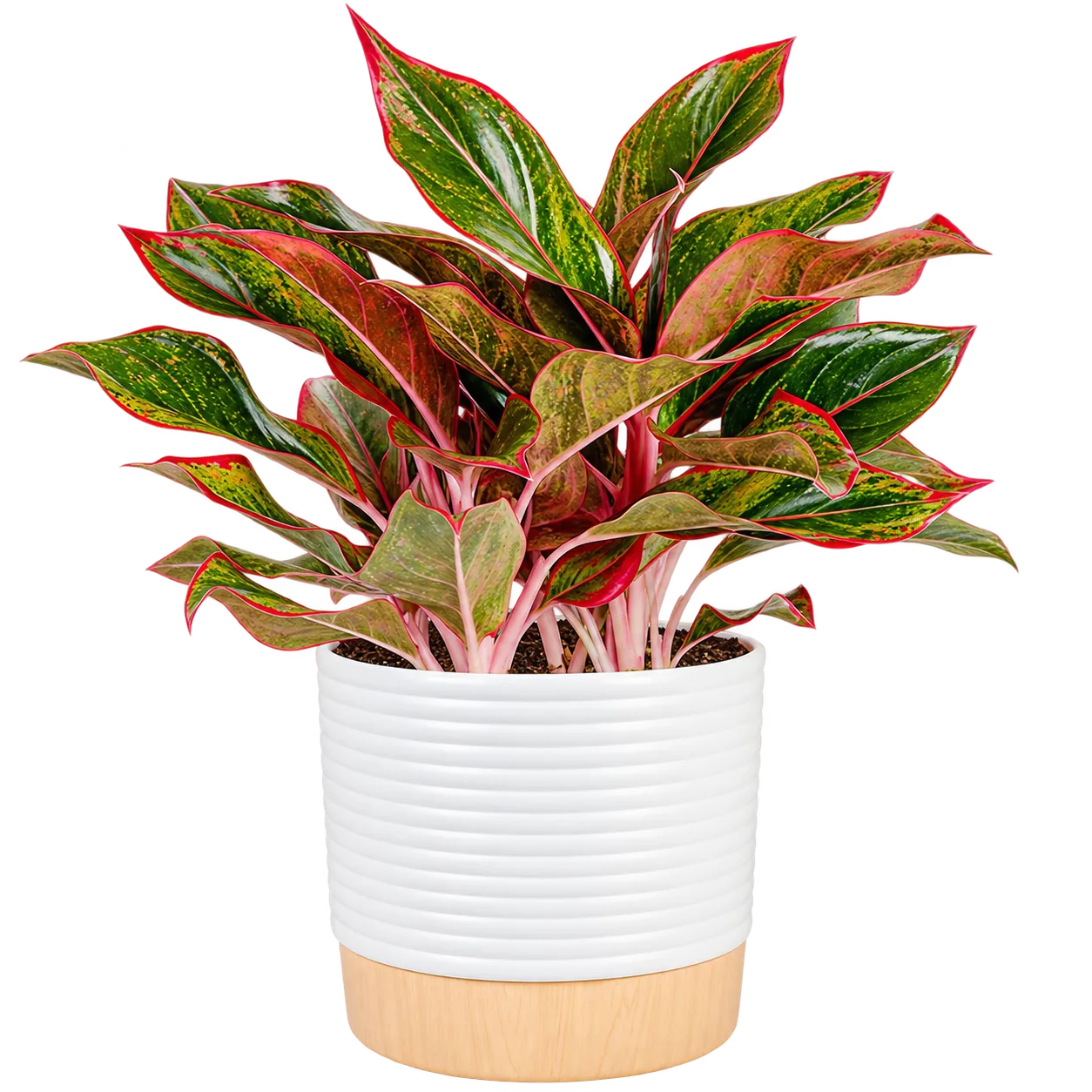
Costa Farms Chinese Evergreen
Live Indoor Plant • Medium (12 Inches Tall)
Stunning red and green patterned foliage,
easy to maintain, and ideal for adding
color to modern indoor spaces.
Are Plants Better Than Air Purifiers?
Not for removing airborne particles.
A correctly sized HEPA purifier can filter dust, smoke particles, and some airborne allergens.
A few houseplants can’t deliver comparable particle filtration, and neither replaces ventilation or makes carbon monoxide safe.
If your goal is cleaner air rather than just attractive decor, see our home air purifier guide.
Buying Live Plants Online: Three Things to Check
Check the botanical name so you know which plant you’re ordering.
Compare pot size and shipping conditions, especially during winter freezes or summer heat.
Finally, verify pet safety and seller reviews before checkout.
Amazon availability and product details can change, so read the current listing rather than relying on an old photograph.
FAQ: Best Indoor Plants for Air Quality
Do indoor plants really purify household air?
Some absorb selected chemicals in laboratory conditions, but typical numbers of potted plants have not been shown to clean the air of occupied homes effectively.
Which of these plants are safest around cats and dogs?
Spider plants, Boston ferns, and parlor palms are classified as non-toxic to cats and dogs by the ASPCA. Still discourage chewing.
Which indoor plant is best for beginners?
A snake plant or ZZ plant is a good starting point if you tend to forget watering. For pet-owning beginners, consider a spider plant.
Final Thoughts
A new leaf unfurling on your windowsill is a small pleasure worth enjoying on its own.
Pick the plants that fit your home’s light, your routine, and your household.
For healthier indoor air, pair that greenery with ventilation, source control, and filtration when needed—not unrealistic promises from a plant label.
[…] For a closer look at popular varieties, explore our guide to the 8 best indoor plants for air quality and what science really says. […]