
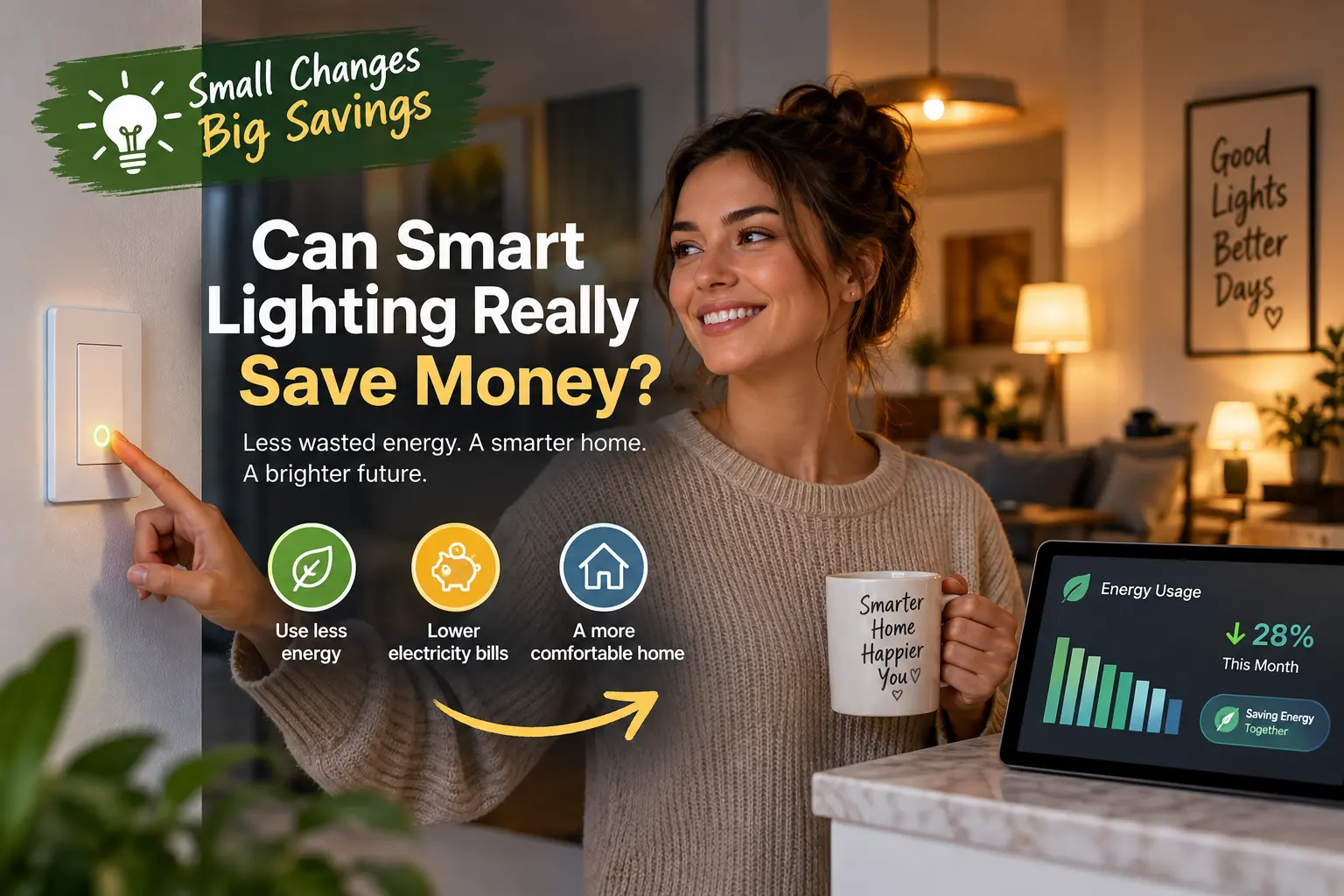
Smart lighting sounds convenient: lights that switch off when you leave, dim themselves at night, follow schedules, and respond to your phone or voice. But once you see the price of smart bulbs, switches, hubs, and sensors, a more practical question appears: can smart lighting save money, or are you simply paying more for convenience? The answer is more interesting than a simple yes or no. Used intelligently, smart lighting can reduce wasted electricity and make efficient LED lighting easier to manage—but the size of the savings depends heavily on what you are replacing and how you actually use your lights.
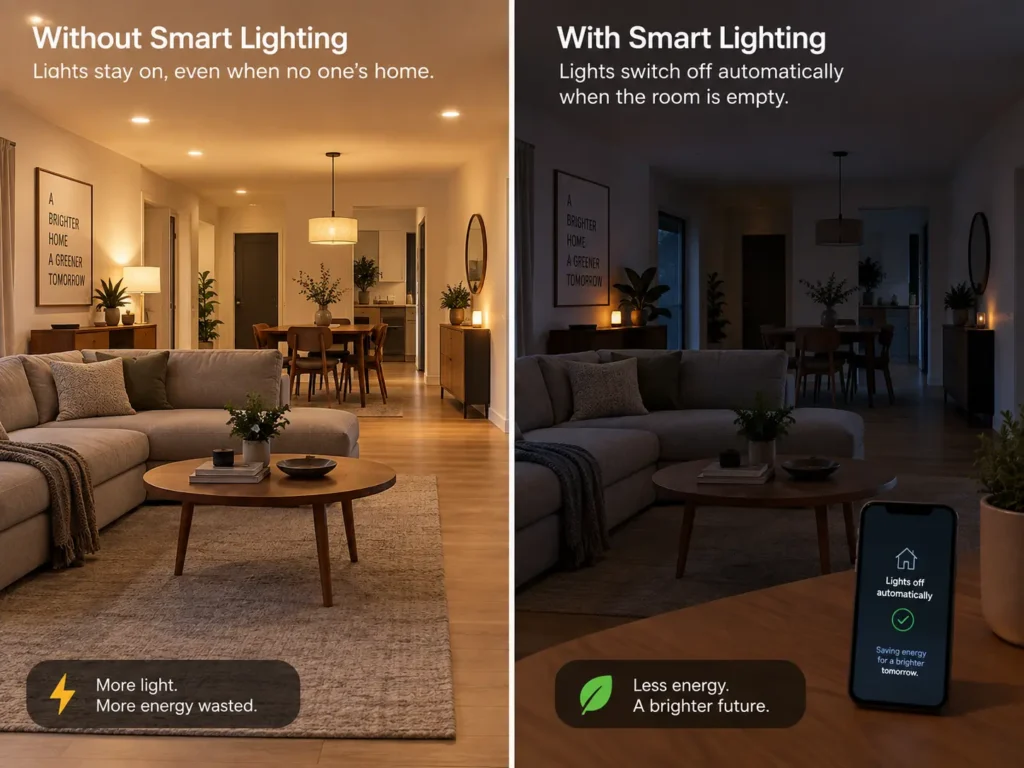
Can Smart Lighting Really Lower Your Electricity Bill?
Yes, but the biggest savings usually come from two things working together: efficient LEDs and better control. LED lighting can use up to 90% less energy than traditional incandescent lighting, according to ENERGY STAR. Smart controls then add another opportunity to save by switching lights off, dimming them, or preventing them from running when nobody needs them. (ENERGY STAR)
So when people ask whether smart lighting save money, I like to think of it this way: the smart feature does not magically make electricity cheaper. It simply gives you more ways to stop wasting it. And sometimes, stopping those small daily habits—leaving hallway lights on, forgetting the porch light, lighting an empty bedroom—can matter more than you expect.
The Biggest Saving May Happen Before the “Smart” Part
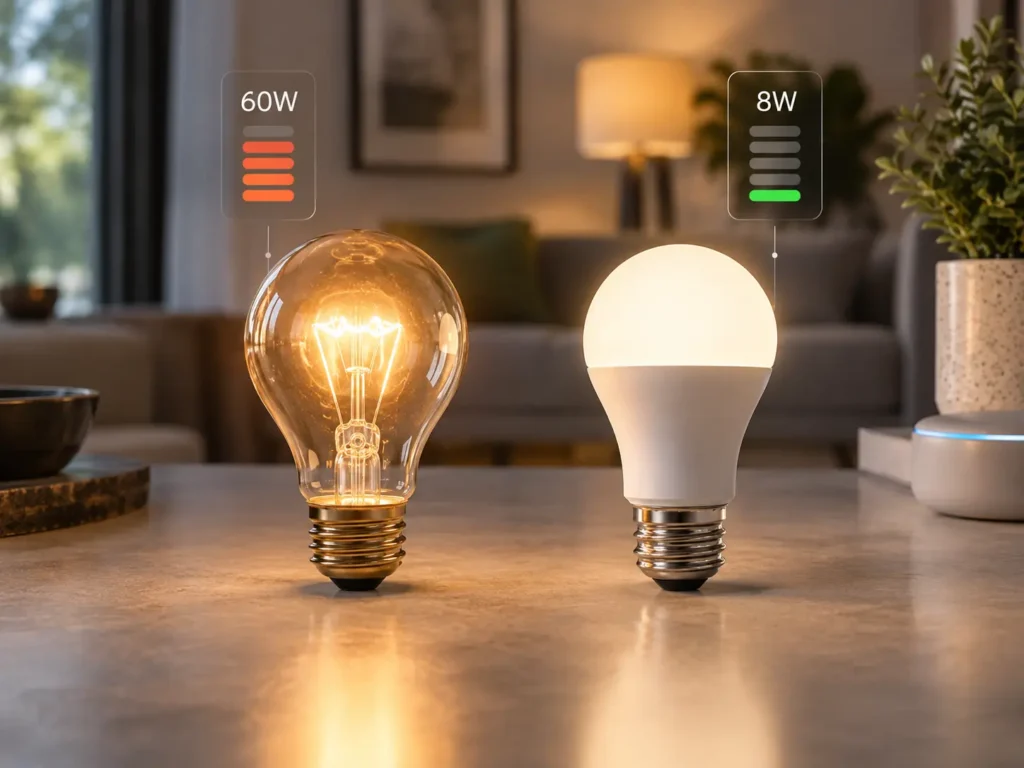
Imagine replacing an old incandescent bulb with a smart LED. A large portion of your energy reduction comes from moving to LED technology in the first place. ENERGY STAR says LEDs can produce light up to 90% more efficiently than incandescent bulbs, while the U.S. Department of Energy describes LED as today’s most energy-efficient lighting technology.
This distinction is important when calculating whether smart lighting save money in your home. If you already use efficient LED bulbs and always remember to switch them off, changing everything to smart bulbs may not suddenly transform your electricity bill. But if your home still has inefficient bulbs—or your lights are regularly left running unnecessarily—the potential becomes much more attractive.
The Little Habit That Costs More Than You Think
You walk downstairs, turn on the kitchen light, make coffee, and leave. Two hours later, the light is still glowing in an empty room.
It seems harmless because one bulb does not consume much electricity. But multiply that habit by the kitchen, hallway, bathroom, kids’ rooms, garage, porch, and an entire year. Suddenly, you begin to understand where smart controls become useful. If you wonder can smart lighting save money for a forgetful household, automatic shutoffs may be one of the strongest arguments for it.
Trick #1: Put Your Lights on Schedules
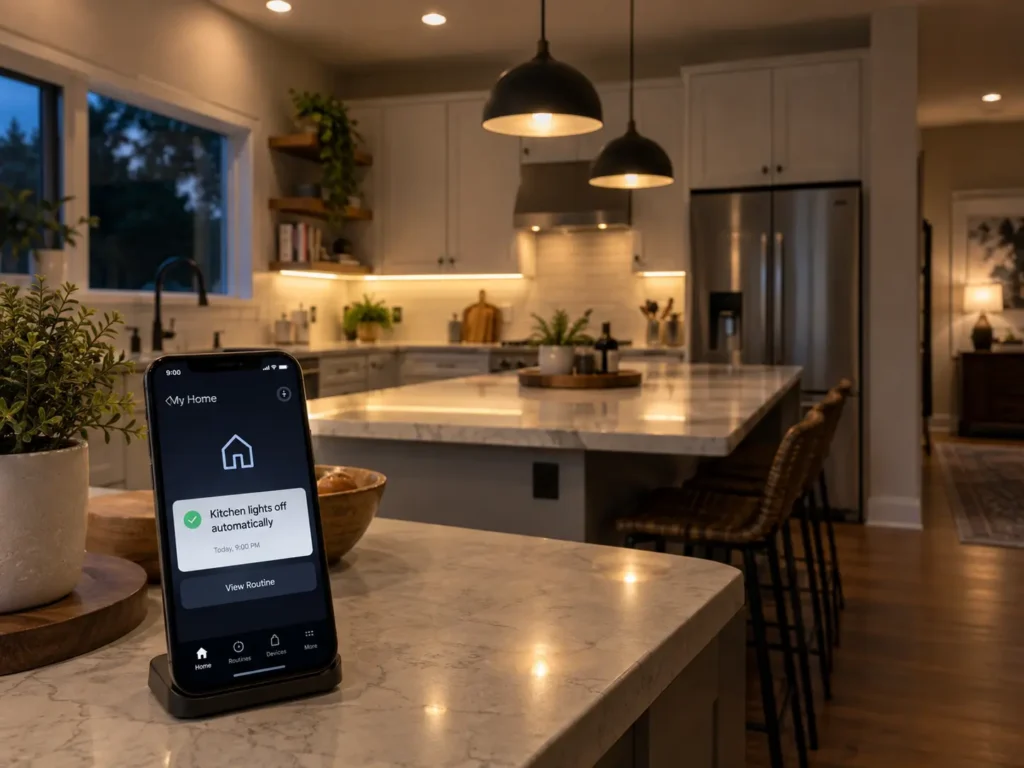
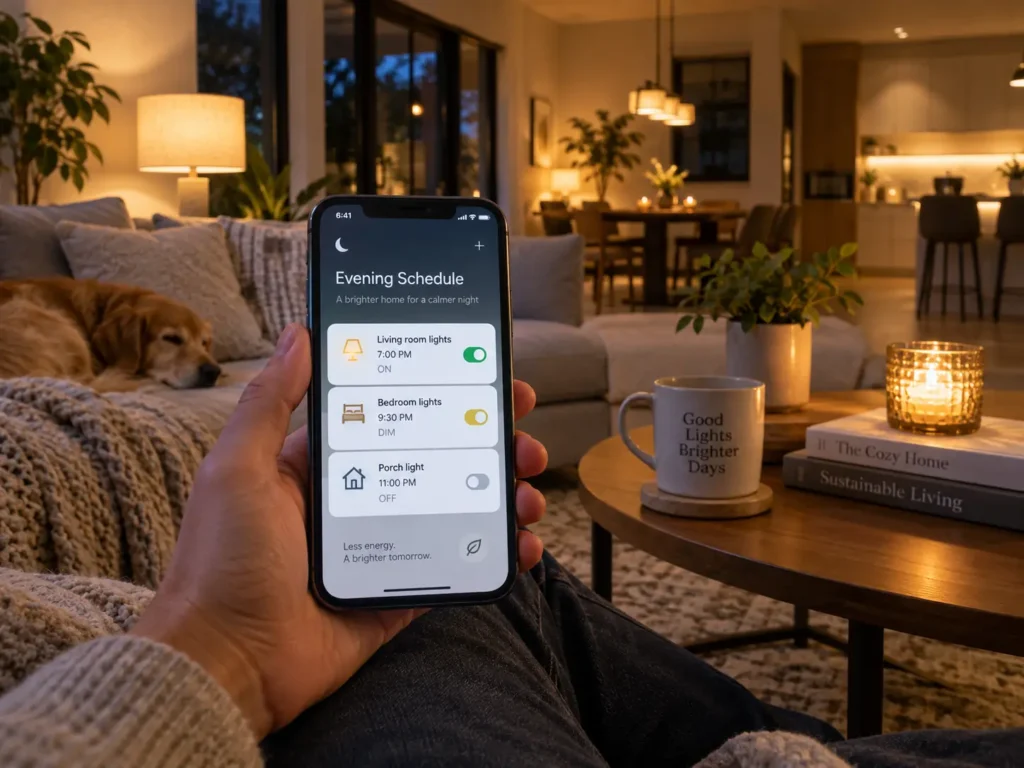
One of the easiest ways to create smart lighting savings is also one of the least exciting: schedules.
And that is exactly why it works.
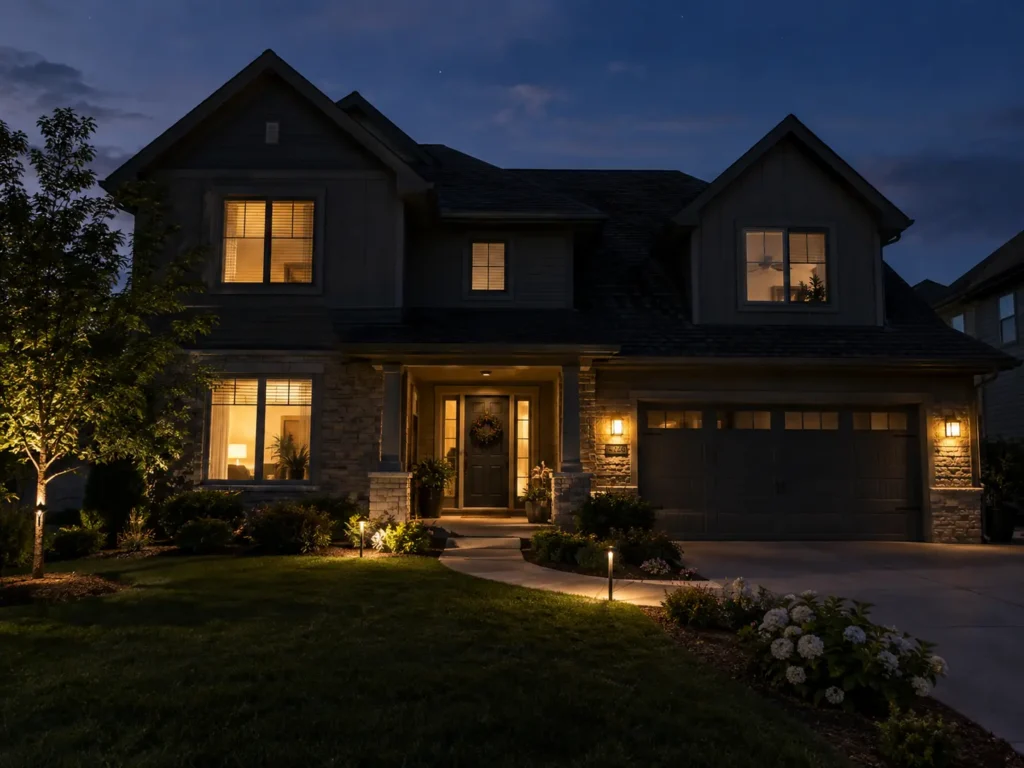
Instead of relying on yourself to remember everything every day, set the porch lights to turn off after bedtime. Have downstairs lights shut down automatically at midnight. Turn decorative lighting off after the family goes to sleep. ENERGY STAR specifically highlights schedules, remote controls, occupancy features, and location-based automation as ways connected lighting can help reduce unnecessary energy consumption.
If your goal is to make smart lighting save money, automation should remove decisions rather than create more of them.
Trick #2: Use Motion Sensors Where People Forget the Switch
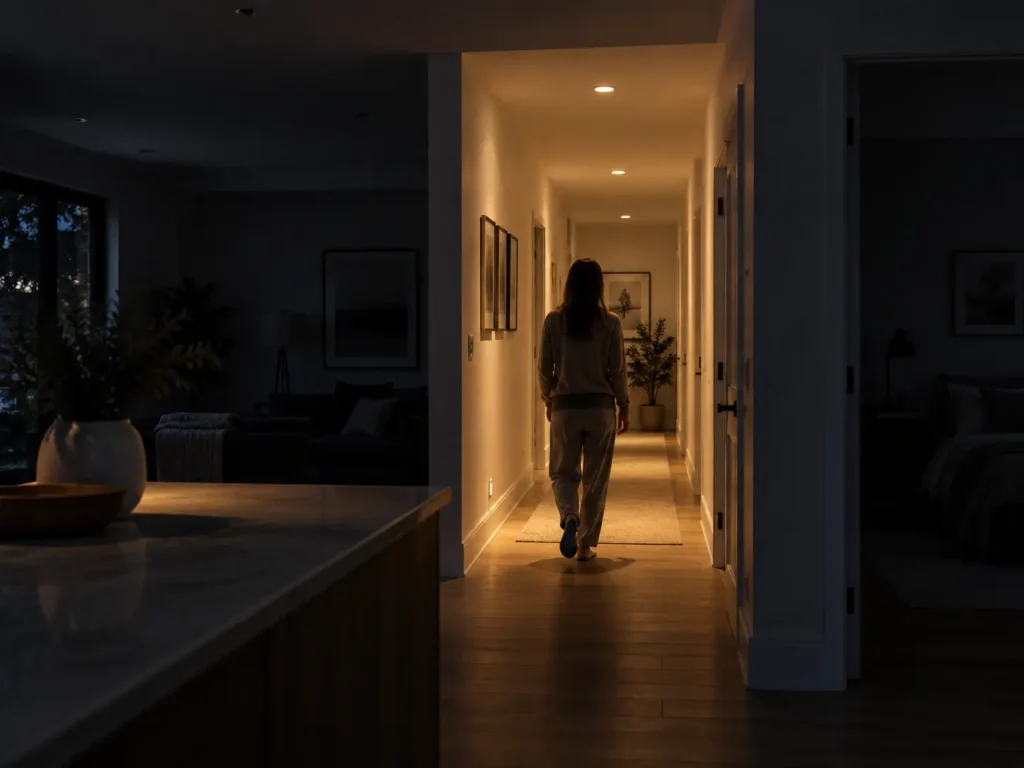
A motion sensor in the living room may annoy you. A motion sensor in a hallway, laundry room, closet, basement, pantry, or garage can feel brilliant.
These are exactly the spaces where lights are often switched on briefly and forgotten.
Occupancy controls have shown meaningful lighting-energy reductions in commercial and institutional settings, though the savings vary considerably depending on the room and how it is used. DOE guidance reports ranges from about 10% to much higher levels in some building spaces, which illustrates why automation can matter when lights otherwise remain on unnecessarily. Those commercial results should not be treated as a guaranteed household saving, but the basic principle is the same.
So, can smart lighting save money with motion sensors? It has the best chance in places where your existing behavior wastes light.
Trick #3: Dim More Often
Brightness is another overlooked opportunity.
Your home does not need 100% brightness every minute of the day. During movie night, late evenings, dinner, or early mornings, you may actually prefer softer lighting. LEDs are well suited to dimming and advanced controls, and the Department of Energy notes that LED technology can integrate with controls such as sensors and dimming to provide further energy savings.
This is where saving money starts feeling less like sacrifice. Instead of sitting in darkness to lower consumption, you create a more comfortable atmosphere. Making smart lighting save money can therefore mean using less light when less light actually feels better.

Trick #4: Use “Away” Routines Instead of Leaving Lights On All Day
A lot of people leave lights on when traveling because they want the house to look occupied.
Smart lighting offers a cleaner solution.
You can schedule selected lamps to turn on at realistic times and switch off again later rather than leaving several bulbs running continuously. ENERGY STAR also recommends connected “away” modes that operate lights minimally while homeowners are away.
If you are trying to make smart lighting save money, this is the mindset to adopt: automate the lighting you actually need rather than illuminating the entire house “just in case.”
Trick #5: Use Geofencing Carefully
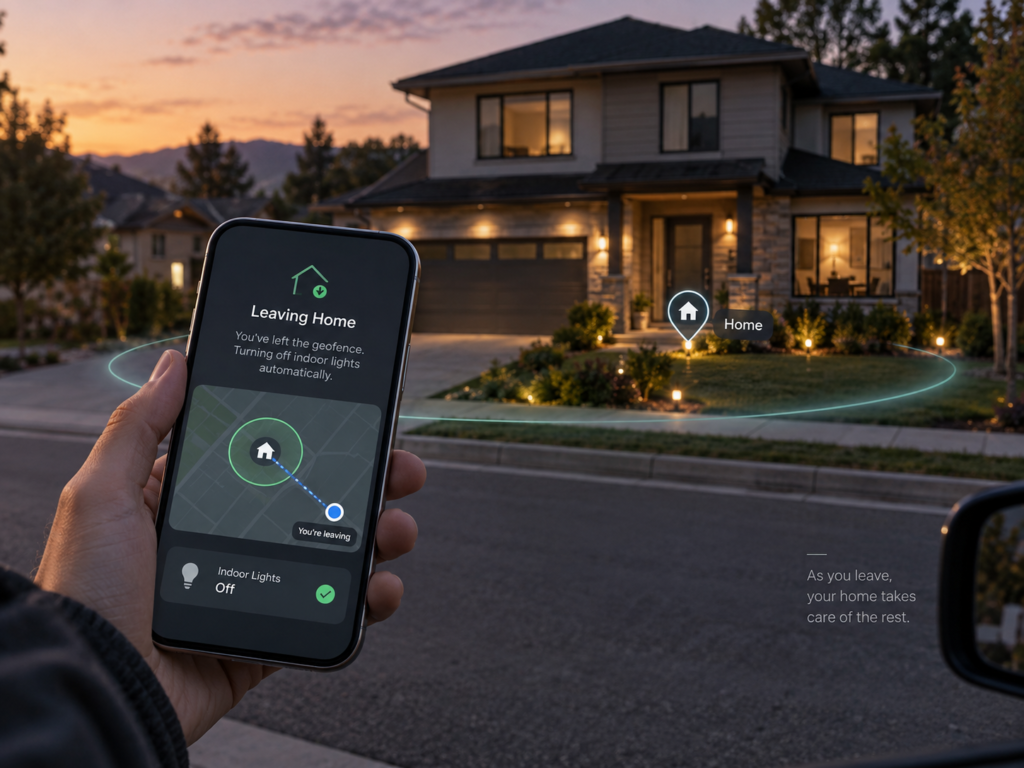
Imagine leaving home and having every unnecessary light switch off automatically.
That is geofencing.
Your smart-home system uses the location of your phone to trigger an action when you leave or return. ENERGY STAR specifically identifies location-based controls as one way smart lighting can automatically reduce wasted energy.
It is another answer to can smart lighting save money, particularly if people in your household frequently forget lights. Just configure it thoughtfully in multi-person homes—you probably do not want the system switching everything off because one family member went to the supermarket while everyone else stayed home.
But Smart Bulbs Cost More Upfront
Here is the part marketing pages sometimes skip.
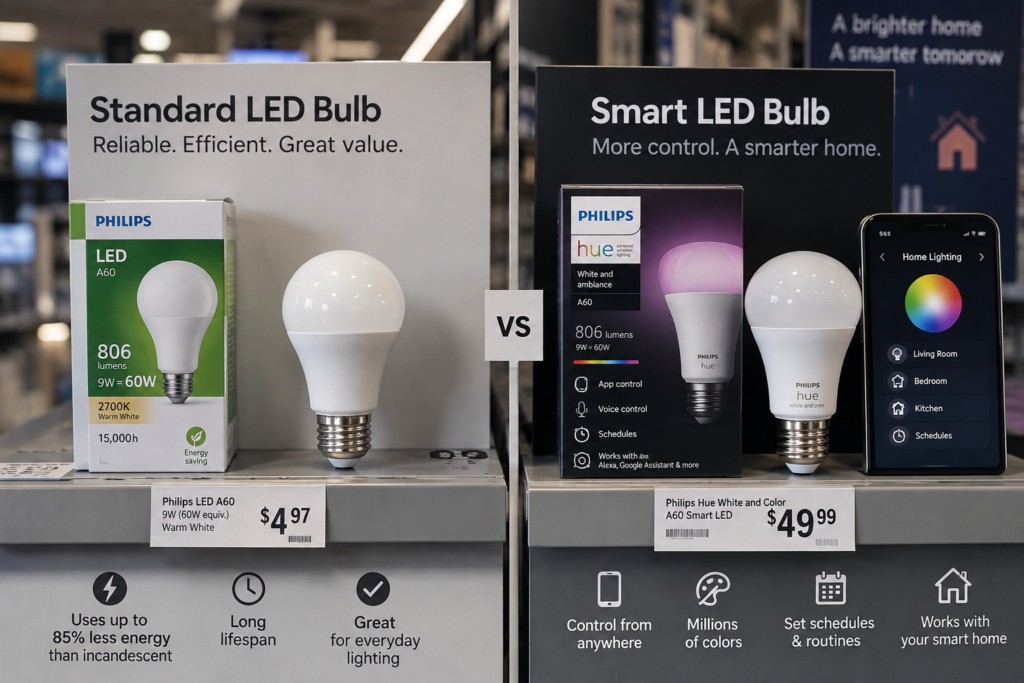
A regular LED bulb can be inexpensive. A smart bulb may cost considerably more, especially if you want color changing, Matter support, advanced scenes, a hub, or premium ecosystem compatibility.
That means asking whether smart lighting save money requires thinking about payback, not simply electricity use.
If you replace a perfectly good efficient LED that you already control responsibly with an expensive smart bulb, the energy savings alone might take a long time to recover the purchase price. If you replace an inefficient bulb or solve a habit where lights remain on for hours, the economics become more favorable.
You Probably Don’t Need Smart Bulbs Everywhere
This is one of the easiest mistakes to avoid.
You do not have to turn your entire home smart in one weekend.
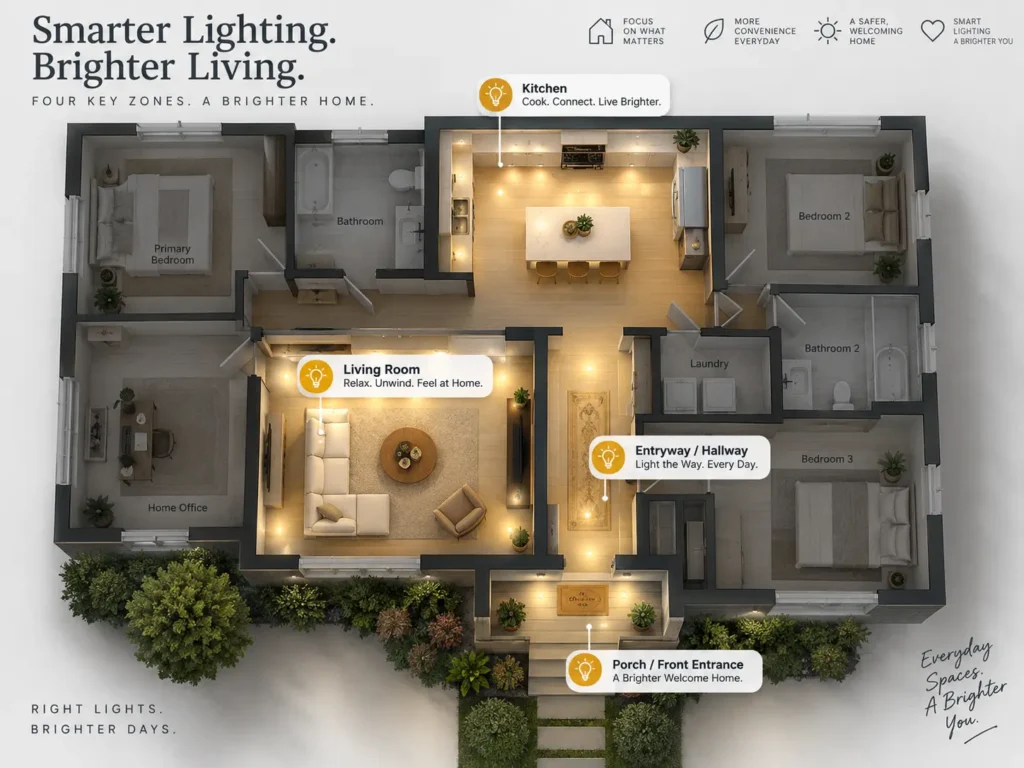
Start where automation will genuinely improve your routine: the porch, hallway, living room, bedroom, garage, or the lights you forget most often. If smart lighting save money is your main objective, prioritize high-use and high-waste areas before decorative lamps that are switched on only occasionally.
A five-minute-per-day lamp does not need an expensive automation system simply because you can add one.
Smart Bulb or Smart Switch?
This decision can completely change the cost of your setup.
One smart bulb controls one bulb. A smart switch may control several bulbs connected to the same circuit. In a room containing six ceiling bulbs, replacing all six with connected bulbs may cost far more than installing one compatible smart switch.
On the other hand, smart bulbs offer features that ordinary bulbs connected to a smart switch cannot always provide, such as individual color control and scenes.
If the goal is strictly to make smart lighting save money, think in terms of cost per controlled light, not simply which gadget looks more exciting.
3 Smart Switches Worth Considering
If you want to waste less energy and automate your lights more easily, these smart switches are three of the best options to consider.
Kasa Smart Light Switch HS200
Wi-Fi single-pole smart switch with schedules, remote control, Alexa and Google Home support, and no separate hub required.
Lutron Caseta Smart Dimmer Switch
A premium smart dimmer for creating schedules, lowering brightness, and automating your lights without requiring a neutral wire.
Leviton Decora Smart Wi-Fi Switch
Matter-compatible Wi-Fi smart switch with schedules, voice control, and support for Alexa, Google Assistant, and Apple Home.
What About Standby Power?
A smart bulb needs to remain connected so it can receive commands, even while the light itself is off. That means it can consume a small amount of standby electricity.
This does not automatically cancel the savings. ENERGY STAR’s smart-lighting guidance notes that qualifying connected products are designed to use less energy both while operating and in standby.
But it reinforces an important point: asking can smart lighting save money should involve the entire system—not only flashy automation features. Efficient hardware, sensible routines, low standby use, and good household habits all matter.
The Best Money-Saving Setup Is Surprisingly Simple
You do not need twenty scenes called “Sunset Relaxation Mode 7.”
For most homes, I would begin with four automations:
Lights off when everyone leaves. Evening lights automatically dim. Porch and outdoor lights follow a schedule. Hallways and utility spaces use motion sensors where practical.
That combination attacks the simplest form of waste: lights operating when they are not providing useful light.
And that is ultimately how smart lighting save money becomes more than a marketing promise.
Comfort Is Part of the Value Too
There is another benefit that is harder to put into dollars.
Maybe you love having the bedroom gradually become warmer at night. Maybe you appreciate walking into the kitchen with your hands full and having the lights come on automatically. Maybe your outdoor lights switching themselves off means one fewer thing to remember before bed.
Even if your electricity savings are modest, those conveniences still have value.
So when you ask can smart lighting save money, the better question may be: Will it save enough energy and improve my daily life enough to justify what I spend?
For many households, that is a much more useful calculation.
When Smart Lighting Probably Won’t Save You Much
There are also homes where the financial impact will be small.
If every bulb is already LED, everyone reliably switches lights off, the lights are rarely used, and you purchase an expensive connected ecosystem purely to reduce electricity costs, the payback may disappoint you.
Smart technology cannot eliminate waste that was not happening in the first place.
That is why smart lighting save money works best as a strategy for improving an inefficient setup or behavior—not as a guarantee attached to every Wi-Fi bulb.
So, Can Smart Lighting Save Money?
Yes—smart lighting can save money, particularly when it combines efficient LED technology with schedules, sensors, dimming, remote shutoff, and routines that prevent unnecessary use. But your savings will depend on your old lighting, electricity rate, daily habits, number of bulbs, and how much you spend on the upgrade.
The smartest approach is not replacing everything because “smart” sounds better. Start with the areas where lights run longest or are forgotten most often. Automate those first. Watch how your household actually uses them. Then expand only where the convenience or savings justify it.
That approach makes smart lighting save money while keeping the smart-home upgrade itself from becoming the expensive part.
FAQ
Does Smart Lighting Use Less Electricity?
Smart LED lighting can use substantially less electricity than older incandescent lighting because the underlying LED technology is much more efficient. Smart controls can reduce usage further when they prevent lights from operating unnecessarily. ENERGY STAR reports that LED technology can be up to 90% more efficient than incandescent lighting.
Can Smart Lighting Save Money If I Already Have LED Bulbs?
Potentially, but the savings may be smaller. If your existing LEDs are already efficient, the benefit comes mainly from controls such as schedules, motion detection, dimming, geofencing, and remote shutoff. In this situation, convenience may be as important as the electricity savings.
Are Smart Bulbs Worth the Extra Cost?
They can be when you use the features that justify the premium. A smart bulb that automatically prevents hours of unnecessary operation offers more financial value than one purchased only to change colors occasionally. To determine whether smart lighting save money for you, compare upfront cost with how often the automation will actually reduce usage
Final Thoughts
Smart lighting is most useful when technology quietly disappears into your routine. You stop thinking about whether the hallway light is still on. Your porch switches itself off. The bedroom dims naturally. Empty rooms stop consuming electricity simply because someone forgot a switch.
That is the real answer to can smart lighting save money: yes, but the savings come from combining efficient lighting with smarter behavior and automation. Buy strategically, automate the places where waste actually happens, and let the system handle the small decisions that are easy to forget.
If you’re ready to go beyond saving energy and want to make your home feel more comfortable, flexible, and enjoyable, explore our guide to the best smart lighting ideas. You’ll find practical ways to use smart lighting in different rooms, create better moods, and get more value from the lights you already use every day.