

Have You Ever Felt Cold… Even with the Heat Turned Up?
“Why is my house still freezing? The thermostat says 72°F!”
If you’ve ever asked yourself that question, you’re not alone.
Every winter, millions of homeowners spend hundreds—or even thousands—on heating, only to watch warm air quietly escape through the attic, windows, doors, and tiny cracks they never noticed.
The same thing happens in summer.
Your air conditioner works overtime, your electricity bill climbs higher every month, and somehow your living room still feels warmer than you’d like.
Here’s the truth: The problem isn’t always your heating or cooling system.
More often than not, it’s your home’s insulation.
Think of insulation as your home’s favorite cozy blanket. When it’s doing its job, your house stays comfortable with much less effort. When it’s not… well, it’s like wearing a winter coat with the zipper wide open.
The good news?
You don’t need a complete renovation to make a noticeable difference.
A few smart improvements can dramatically reduce heat loss, increase comfort, and lower your energy bills year after year.
In this guide, I’ll share 10 Powerful Home Insulation Tips that homeowners around the world use to create warmer winters, cooler summers, and smarter homes.
Along the way, we’ll look at real-life stories, expert recommendations, and practical ideas you can actually apply—whether you live in Boston, Brussels, Seoul, or anywhere in between.
👉 Let’s discover how a better-insulated home can save you money while making every room more comfortable.
Quick Answer
Home Insulation Tips help reduce heat loss during winter and keep unwanted heat out during summer by improving your home’s thermal barrier.
Simple upgrades like sealing air leaks, insulating the attic, adding weather stripping, and installing insulated curtains can improve comfort while lowering heating and cooling costs.
Why Home Insulation Matters More Than Ever
Energy prices continue to fluctuate, and homeowners everywhere are looking for smarter ways to reduce monthly expenses.
According to the U.S. Department of Energy, heating and cooling account for the largest share of energy use in most American homes. Improving insulation and sealing air leaks are among the most effective ways to lower that consumption.
The best part?
Unlike constantly adjusting your thermostat, proper insulation works quietly in the background—24 hours a day, every season of the year.
It’s one of those home improvements you stop noticing… because your home simply feels comfortable all the time.
🏡 Story #1 – A Small Apartment in Seoul
Last winter, I was reading about energy-efficient apartment upgrades in Seoul, South Korea, where winters can be surprisingly cold.
One homeowner living in a modern high-rise couldn’t understand why the heating system seemed to run almost nonstop.
The apartment looked beautiful.
The windows were modern.
The heating worked perfectly.
Yet every evening, cold air seemed to appear out of nowhere.
Instead of replacing expensive equipment, they installed insulated curtains and sealed tiny gaps around the balcony doors.
The difference was immediate.
The apartment stayed warmer well into the evening, and the heating system didn’t need to run as often.
Sometimes, the smartest home improvement isn’t buying something new.
It’s preventing what you already pay for from escaping.
💡 SmartLiving Tip: Before replacing expensive appliances, check where your home is losing heat. Stopping energy loss is often cheaper than producing more energy.
10 Powerful Home Insulation Tips
Seal Air Leaks Before Adding More Insulation
Here’s a mistake many homeowners make:
They invest in new insulation while warm air is still escaping through tiny cracks around windows, doors, pipes, and electrical outlets.
Imagine filling a bucket with water…
…while there’s a hole in the bottom.
That’s exactly what happens when your home isn’t properly sealed.
Use:
- Weather stripping
- Caulk
- Foam sealant
- Door sweeps
to close those hidden leaks.
Even small gaps can make your heating and cooling systems work much harder than necessary.
Upgrade Your Attic Insulation
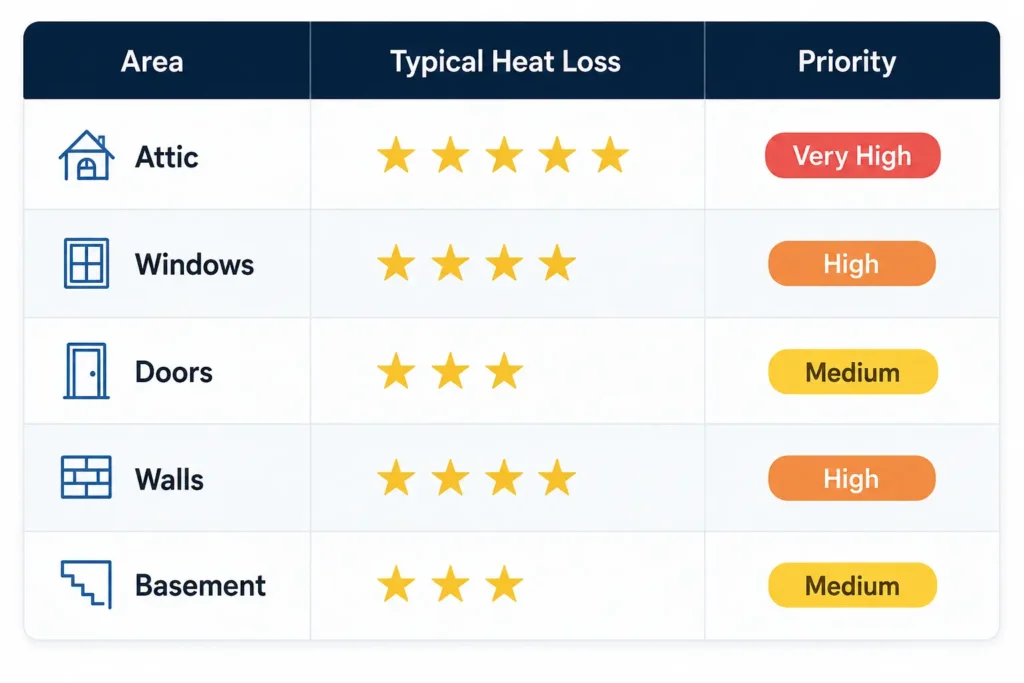
If your attic isn’t properly insulated, it becomes the easiest escape route for warm air.
Heat naturally rises.
Without enough insulation overhead, your furnace spends the entire winter trying to warm… the sky.
According to energy experts, improving attic insulation is often one of the highest-return home efficiency upgrades.
If you only improve one area of your home, start here.
Comparison Table: Where Homes Lose the Most Energy
🏡 Story #2 – Boston’s Drafty Winter
Boston winters aren’t exactly gentle.
A family living in a charming 1940s home noticed something strange.
Every time someone walked past the living room windows…
…they felt a cold draft.
At first, they assumed the furnace needed replacing.
Fortunately, an energy audit revealed the real culprit:
Poor attic insulation and several air leaks around older window frames.
Rather than spending thousands on a new heating system, they invested in sealing leaks and upgrading attic insulation.
The following winter, the furnace cycled less often, the house felt noticeably warmer, and those chilly drafts became a thing of the past.
Sometimes, your heating system isn’t the problem.
Your home is simply asking for a better winter coat.
Install Weather Stripping Around Doors and Windows
One tiny gap under a door might not seem important.
Multiply that by every door and window in your house…
Now imagine leaving one small window slightly open all winter long.
That’s how unnoticed air leaks quietly increase your heating bill.
Weather stripping is:
✔ Affordable
✔ Easy to install
✔ Highly effective
It’s one of the simplest Home Insulation Tips you’ll ever implement.
Add Insulated Curtains
Most people buy curtains because they look nice.
Energy-efficient curtains do much more.
They create an extra thermal barrier between your room and the window.
Benefits include:
- Warmer rooms in winter
- Cooler interiors during summer
- Less direct sunlight
- Increased privacy
- Better noise reduction
Think of them as sweaters…
…for your windows.
💡 Did You Know?
Even high-quality windows can still allow heat transfer. Insulated curtains help reduce that transfer, making rooms more comfortable throughout the year.
Insulate Your Basement or Crawl Space
Many homeowners focus on walls and roofs.
Meanwhile…
Cold air quietly enters from below.
A poorly insulated basement can create cold floors, uncomfortable rooms, and unnecessary heating costs.
Adding insulation beneath your living space improves comfort from the ground up.
And yes…
Walking barefoot across a warm floor in January feels surprisingly luxurious.
🏡 Story #3 – An Old Brick House in Utrecht, Netherlands
The Netherlands has long been known for building energy-efficient homes, but not every house is modern.
A homeowner in Utrecht lived in a charming brick house built decades ago. It looked beautiful from the outside, but every winter morning, the floors felt like ice.
Replacing the heating system seemed like the obvious solution.
Instead, an energy consultant suggested something much simpler:
Insulate the floor and the crawl space first.
A few weeks later, the difference was remarkable.
The living room warmed up faster, the heating stayed off longer, and walking barefoot across the wooden floor no longer felt like stepping onto an ice rink.
The homeowner later admitted,
“I thought I needed a better heater. What I really needed was a better-insulated home.”
Sometimes comfort starts beneath your feet.
Insulate Your Floors
People often think heat only escapes through the roof.
Not true.
Cold floors can lower the temperature of an entire room, making your heating system work much harder.
Floor insulation helps by:
✔ Keeping warmth inside
✔ Reducing drafts
✔ Improving comfort
✔ Lowering heating costs
It’s one of those upgrades you notice every single day.
Especially on cold winter mornings.
💡 SmartLiving Tip
Before buying a larger heating system, ask yourself one question:
“Am I heating my family… or heating the outdoors?”
Reducing heat loss is almost always more affordable than producing more heat.
Insulate Pipes and Water Heaters
Here’s something many homeowners never think about.
Hot water loses heat while traveling through uninsulated pipes.
That means your water heater works harder…
…and your shower takes longer to reach the perfect temperature.
Pipe insulation is inexpensive, easy to install, and helps your system retain heat more efficiently.
Small investment.
Daily savings.
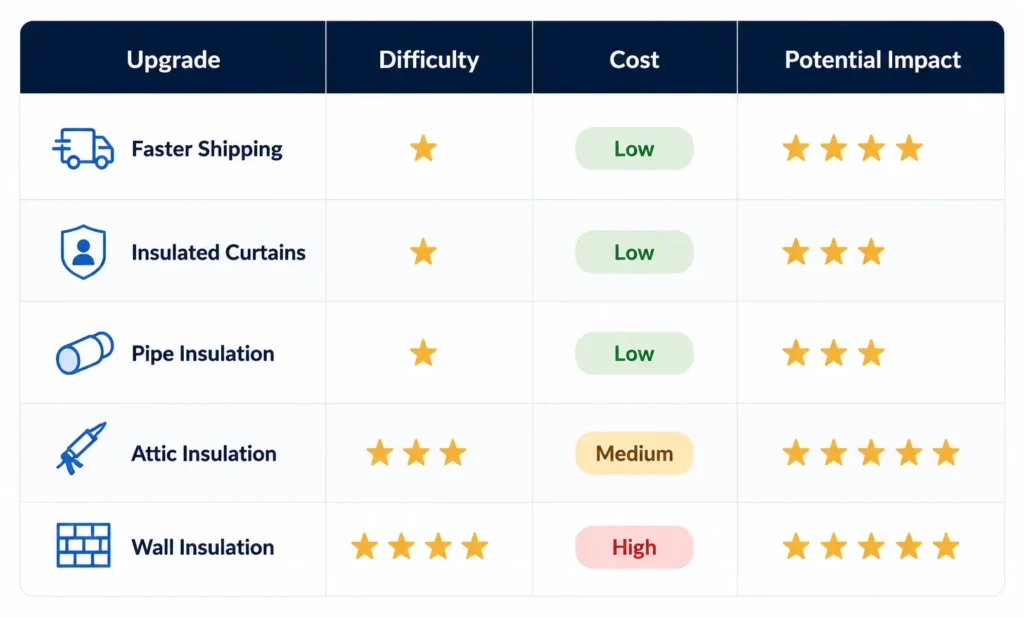
Comparison Table – Easy Upgrades vs Long-Term Improvements
🏡 Story #4 – Renovating a First Home in Ghent, Belgium
Buying your first home is exciting.
Renovating it?
Not always.
A young couple in Ghent, Belgium, quickly discovered that their heating bills were much higher than expected.
Every evening, the upstairs bedrooms became cold just hours after turning off the heat.
Instead of replacing the boiler, they decided to insulate the attic.
The following winter surprised them.
Their bedrooms stayed warm much longer.
The heating system ran less frequently.
And perhaps the biggest surprise?
Their home also became noticeably quieter during windy nights.
Good insulation doesn’t only save energy.
It creates a calmer, more comfortable place to live.
Don’t Forget Your Garage
If your garage is attached to your home, it’s part of your home’s thermal envelope.
A poorly insulated garage door allows cold or hot air to affect nearby rooms.
Adding insulation to the garage door can help stabilize indoor temperatures, especially if bedrooms or living spaces share a wall with the garage.
It’s often an overlooked improvement with surprisingly good results.
Use Reflective Insulation in Hot Climates
Not every insulation challenge involves freezing winters.
In places like Arizona, Texas, or parts of Australia, homeowners are trying to keep heat out, not in.
Reflective insulation works by bouncing radiant heat away from your home before it enters your attic.
Less heat inside means your air conditioner doesn’t have to work as hard.
Your home stays cooler.
Your energy bill stays lower.
🏜 Story #5 – Beating the Heat in Arizona
When people hear “insulation,” they usually imagine snow.
But insulation is just as important where temperatures regularly exceed 100°F (38°C).
One Arizona homeowner noticed the second floor became unbearably hot every afternoon.
Instead of replacing the air conditioner, they installed reflective attic insulation and sealed several air leaks around the attic hatch.
A month later, the upstairs stayed noticeably cooler.
The air conditioner cycled less often.
The biggest surprise?
The entire home felt more balanced.
Good insulation isn’t about trapping heat.
It’s about controlling where heat goes.
Schedule a Professional Home Energy Audit
If you don’t know where your home is losing energy…
You’re guessing.
A professional energy audit identifies:
- Hidden air leaks
- Poor insulation
- Heat loss
- Inefficient equipment
- Moisture issues
Some audits even use thermal imaging cameras, making invisible energy loss visible.
Think of it as a health check-up…
…but for your house.
The Numbers Tell the Story
According to the U.S. Department of Energy, homeowners can improve energy efficiency by sealing air leaks and adding proper insulation in key areas like attics, floors, and crawl spaces.
Meanwhile, ENERGY STAR notes that improving insulation and air sealing can enhance comfort while reducing unnecessary heating and cooling demands.
One thing becomes clear:
The cheapest energy is the energy you never waste.
Pros & Cons of Improving Home Insulation
Pros
Lower Energy Bills
Less heat escapes.
Less energy is required.
Your heating and cooling systems don’t have to work as hard.
More Comfortable Living
No more cold bedrooms.
No more hot upstairs rooms.
Just consistent temperatures throughout your home.
Quieter Home
Insulation also absorbs outside noise.
That’s a benefit many homeowners don’t expect.
Higher Home Value
Energy-efficient homes continue to attract buyers looking for lower operating costs.
Smaller Environmental Footprint
Using less energy means producing fewer emissions.
Your home becomes both smarter and greener.
Cons
Upfront Costs
Major insulation projects require an investment.
Fortunately, many upgrades quickly pay for themselves through energy savings.
Installation Can Be Messy
Attic and wall insulation projects may require professional installation.
Thankfully, simple improvements like weather stripping or insulated curtains are DIY-friendly.
Every Home Is Different
There’s no one-size-fits-all solution.
A home built in Boston has different insulation needs than one in Arizona.
That’s why a home energy audit is often the best place to start.
Recommended Products
If you’re ready to improve your home’s efficiency, these upgrades are excellent starting points:
Frost King Weather Stripping Kit
Perfect for sealing doors and windows to reduce drafts.
Duck Max Strength Window Insulation Kit
A budget-friendly way to improve window performance during winter.
NICETOWN Thermal Insulated Curtains
Stylish curtains that also help reduce heat transfer and improve indoor comfort.
SmartLiving369 Recommended Reading
Want to maximize your home’s efficiency?
Continue with these expert guides:
- 11 Powerful Energy-Saving Gadgets That Can Slash Your Electricity Bill in 2026
- 11 Powerful Solar Energy Devices That Can Transform Your Home in 2026
- Why Every Home Needs a Smart Thermostat
- 9 Powerful Ways Voice Assistants Make Your Home Smarter in 2026
Together, these improvements create a home that’s not only warmer in winter and cooler in summer—but also smarter, more efficient, and more enjoyable to live in.
Frequently Asked Questions (FAQ)
What are the most effective Home Insulation Tips?
The best Home Insulation Tips focus on reducing heat transfer and preventing air leaks. Start by sealing gaps around doors and windows, upgrading attic insulation, insulating floors, and using insulated curtains. These improvements often provide the biggest return on investment while making your home noticeably more comfortable.
How much money can proper insulation save?
The amount varies depending on your home’s size, age, climate, and existing insulation. Homes with significant air leaks or poor attic insulation often see the greatest improvements after targeted upgrades.
The best part?
Unlike many home improvements, insulation keeps working every day without any effort from you.
Should I replace my HVAC system before improving insulation?
Usually, no.
If your home constantly loses heat or cool air, installing a larger HVAC system simply means you’ll be paying to heat—or cool—the outdoors.
Improving insulation first often allows your existing heating and cooling system to perform much more efficiently.
Is attic insulation really that important?
Absolutely.
Warm air naturally rises, making the attic one of the biggest sources of heat loss in winter.
Proper attic insulation helps keep that warm air where it belongs—inside your home.
Can Home Insulation Tips also help during summer?
Yes.
Good insulation doesn’t only keep heat inside during winter.
It also helps prevent outdoor heat from entering your home during summer, reducing the workload on your air conditioner.
That’s why insulation is a year-round investment.
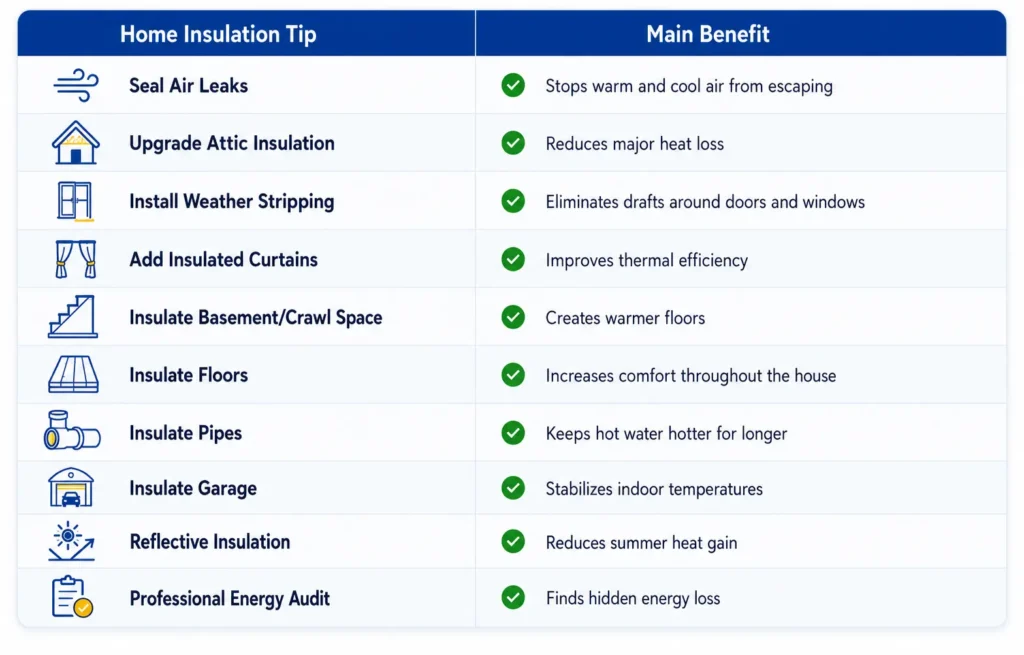
Quick Recap: The 10 Powerful Home Insulation Tips
Interactive Quiz: How Efficient Is Your Home?
During winter, how does your home usually feel?
A) Comfortable without constantly adjusting the thermostat
B) Some rooms feel colder than others
C) I keep increasing the heat, but it never feels warm enough
Answer
- Mostly A → Your insulation is probably performing well.
- Mostly B → Focus on sealing air leaks and improving attic insulation.
- Mostly C → A professional energy audit could identify significant heat loss.
How old is your home?
A) Less than 10 years
B) Between 10 and 30 years
C) More than 30 years
Answer
- Mostly A → Review insulation levels but focus on smart energy management.
- Mostly B → Check weather stripping, attic insulation, and basement insulation.
- Mostly C → Your home may benefit from a comprehensive insulation upgrade.
What’s your biggest goal?
A) Lower my energy bills
B) Improve indoor comfort
C) Reduce my environmental impact
Answer
- Mostly A → Start with attic insulation and air sealing.
- Mostly B → Add insulated curtains, floor insulation, and weather stripping.
- Mostly C → Combine insulation improvements with smart thermostats and solar energy solutions.
Final Verdict
If there’s one lesson I’ve learned while researching energy-efficient homes around the world, it’s this:
The smartest homes don’t necessarily have the biggest heating systems.
They simply waste less energy.
Whether it was the apartment in Seoul, the historic house in Boston, the brick home in Utrecht, the renovated family home in Ghent, or the sun-soaked house in Arizona, the solution wasn’t about using more energy.
It was about keeping the energy they already paid for.
That’s the real power of good insulation.
You don’t notice it every day because it’s invisible.
You notice how your home feels.
Warmer mornings.
Cooler afternoons.
Quieter evenings.
Lower utility bills.
And honestly…
That’s a pretty impressive return for something hidden behind your walls.
🌍 A Home Is More Than Four Walls
When I think about the families in these stories, one thing stands out.
They all lived in different countries.
Different climates.
Different styles of homes.
Yet they all faced the same challenge:
“How can I make my home more comfortable without spending a fortune on energy?”
The answer wasn’t a bigger furnace.
It wasn’t a more powerful air conditioner.
It wasn’t even the newest technology.
It was simply making sure their homes could hold on to the comfort they were already creating.
Maybe your story is next.
Maybe this winter you’ll finally enjoy warm floors in the morning.
Maybe next summer your upstairs bedroom won’t feel like an oven.
And maybe, when your next energy bill arrives, you’ll smile instead of sigh.
That’s what smarter living is all about
Conclusion: A Warmer Home, a Smaller Bill, and a Smarter Future
Creating an energy-efficient home doesn’t have to mean tearing down walls or spending a fortune on renovations.
The most effective improvements are often the simplest ones.
Sealing a draft.
Adding insulation where it’s needed most.
Choosing products that help your home hold on to the warmth in winter and stay cooler in summer.
These Home Insulation Tips are about more than saving money.
They’re about creating a home where your family feels comfortable in every season.
A place that’s quieter, cozier, and more efficient.
At SmartLiving369, we believe every smart home starts with smart decisions. Whether you’re exploring insulation upgrades, energy-saving gadgets, or renewable energy solutions, every improvement brings you one step closer to a home that works smarter—not harder.
👉 Ready to transform your home? Explore more expert guides on SmartLiving369 and discover practical ways to reduce energy costs, improve comfort, and build a smarter home—one upgrade at a time.
💡 SmartLiving369 Pro Tip
“The cheapest energy you’ll ever use is the energy your home never wastes.”
Before replacing expensive equipment, make sure your home is keeping the comfort you’ve already paid for.
[…] 10 Powerful Home Insulation Tips to Cut Energy Bills […]